Marco Rossi · F1 Correspondent
The first wet-weather race under the new regulations began with a red flag before even starting. Hamilton, Verstappen, and several other drivers suddenly lost power behind the safety car. Here’s what we know and which theory could explain the software issue.
Formula 1 wanted to celebrate a comeback in Malaysia, but instead experienced a premiere at the Grand Prix of Bahrain in Malaysia that everyone would have preferred to avoid. Before a single racing lap was completed in Sepang, several cars were stranded on track without power, the safety car found itself in the middle of the field, and race control aborted the starting procedure with a red flag. It was the first wet-weather race since the introduction of the new power units this season, and it exposed how little experience teams and manufacturers have gathered with this scenario so far.
What Happened on Sunday
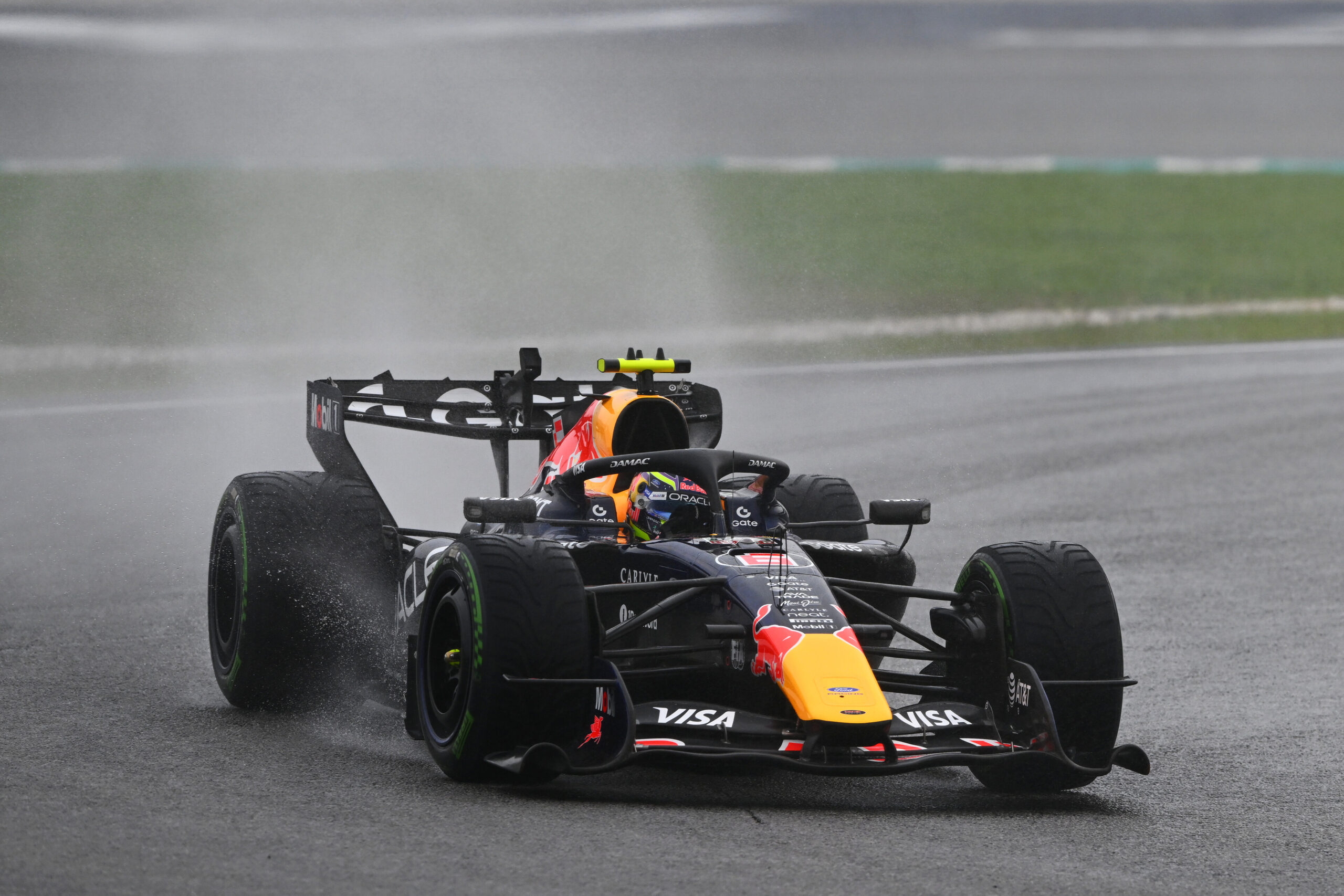
A tropical downpour with heavy rain and lightning swept across the Sepang International Circuit precisely when the field was forming on the starting grid. The FIA postponed the start scheduled for 3 p.m. local time, and the medical car reported standing water on track. With a 40-minute delay, the cars headed out on the formation lap behind the safety car at 3:40 p.m., with a standing start planned afterward.
That didn’t happen. Max Verstappen reported a loss of acceleration from pole position before his Red Bull regained power. Lewis Hamilton, starting second in the Ferrari, rolled through the first lap while the field passed him and eventually came to a halt on the main straight. Over the radio he said: “I’m pressing the throttle and nothing happens.” His race engineer replied: “It’s a software problem we’re trying to resolve.” The car was restarted on track, and Hamilton was running again a lap later.
Hamilton wasn’t alone. According to reports from the paddock, Esteban Ocon in the Haas and Valtteri Bottas in the Cadillac also stalled on track, both running Ferrari power like Hamilton. Gabriel Bortoleto in the Audi also apparently had similar difficulties, Liam Lawson got away from his grid position in the Racing Bulls only with delay, though it’s unclear if his problem had the same cause. Isack Hadjar aquaplaned into Turn 3 and ended up in the gravel but made it back onto the track. As the cars streamed into the pits, the order was so scrambled that race control decided to restore the original starting grid for the restart.
What’s Officially Known
A conclusive explanation from the FIA or the manufacturers has not yet been released. However, the evidence points in one direction: software. In addition to Ferrari’s radio message to Hamilton, Mercedes deputy team principal Bradley Lord confirmed that all teams had received new parameters to upload to their cars and that a software issue may have been behind some of the problems. Former Formula 1 driver Anthony Davidson put it bluntly as a TV expert: “The systems don’t like the rain. They want to be driven the same way every lap.”
This fits the regulatory background. For wet-weather races, the FIA limited electric power this season and banned boost mode. The power unit must therefore know it’s operating in wet mode, and it appears to be precisely at this interface between FIA regulations and manufacturer software where things went wrong. Notably, three cars with Ferrari engines stalled.
A Known Problem in New Form
The issue isn’t entirely new. Already at the season opener in Melbourne, several drivers arrived on the grid with nearly depleted batteries. Red Bull team principal Laurent Mekies explained at the time that the unusual driving behavior during the formation lap—accelerating and braking alternately to bring tires and brakes up to temperature—had put teams at a point where they could no longer achieve the correct state of charge for the start. Energy recovery during the formation lap is limited, while consumption during warm-up is high.
In Sepang, several factors came together that had never occurred in this combination before: multiple slow laps behind the safety car instead of a formation lap, wet track, a new wet-weather mode with limited power, and freshly uploaded parameters. The 2026 power units derive almost half their output from the electrical component, so they respond sensitively when energy management gets out of sync.
Analysis: The Theory of Missing MGU-H
Important disclaimer: What follows is a technical theory from our editorial team and not a confirmed cause. It illustrates why the new regulations could be particularly vulnerable in such a situation.
Until the end of 2025, the MGU-H sat on the turbocharger—an electric machine that kept the turbo spinning even at low engine revs, thus preventing the classic turbo lag. With the 2026 regulations, it was deleted, and the turbo is once again driven exclusively by exhaust gas flow. If a car rolls for minutes at safety car pace and low revs over a wet track, the combustion engine produces little exhaust energy, the turbo loses speed and thus boost pressure.
It’s conceivable that the engine management attempts to compensate for missing torque through the MGU-K at the crankshaft during this phase. Because there’s minimal hard braking behind the safety car and in the rain, little energy can be recovered simultaneously. The battery would thus drain without being recharged. If implausible values then combine—for instance, low boost pressure with high electrical demand—the control system could switch into a protection mode that, in extreme cases, shuts down the power unit. A system restart, like the one Hamilton performed on track, would fit this scenario.
Whether this chain reaction actually unfolded this way, no one outside can currently say. Official statements have so far mentioned software and new parameters, not boost pressure or battery status. The theory is nonetheless plausible because it explains why slow driving behind the safety car in the rain became a problem.
What Matters Now
At the time of writing, a restart was still pending, with the time window for the race extending until 6:40 p.m. local time. More is at stake this afternoon for Formula 1 than just the result. The new regulations failed their first genuine wet-weather test before the lights even went out. Whether the FIA and manufacturers quickly and transparently identify the cause will determine how much confidence drivers and fans place in this generation’s technology. Race Trace is following developments from the paddock and will update this article as soon as the cause is confirmed.