Henri Dubois · Endurance Correspondent
Sixth place with an hour to go, 0.591 seconds clear at the finish: Toyota's home triumph at the 6 Hours of Fuji 2026 came down to the very last strategic window.
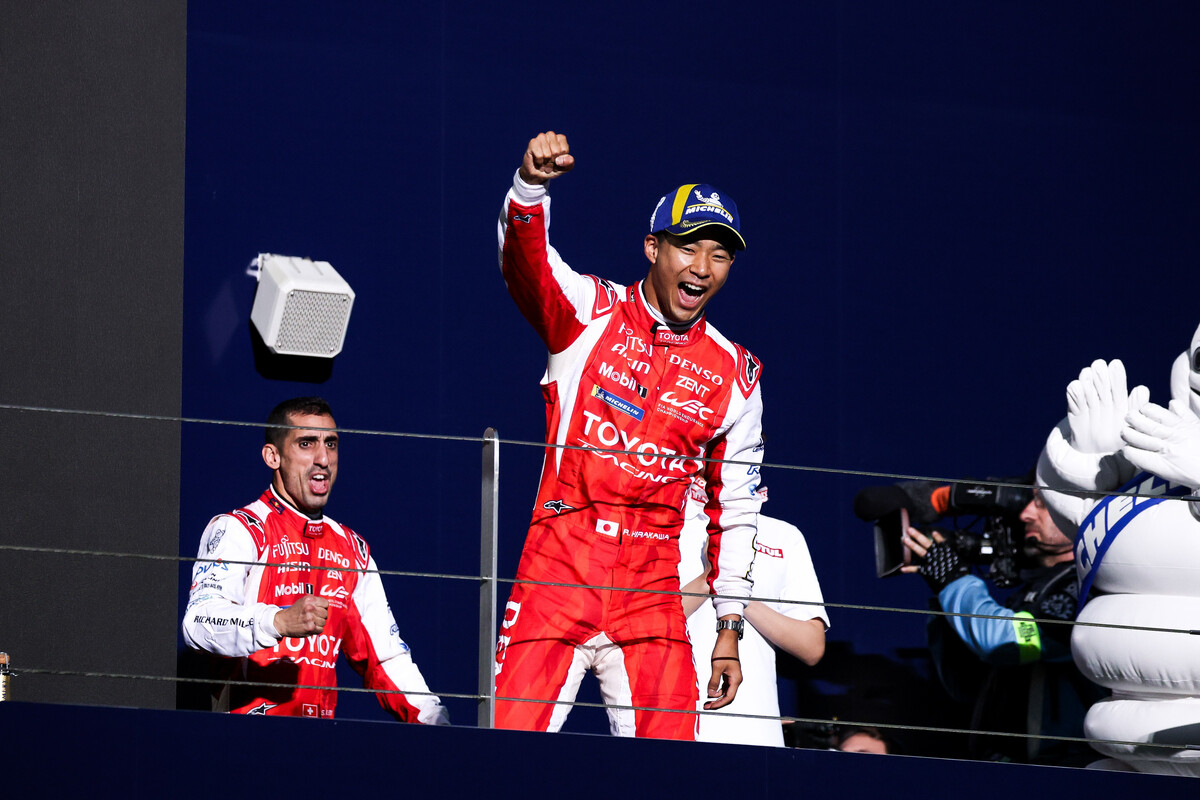
Ryo Hirakawa brought the Toyota #8 across the line at the 6 Hours of Fuji 2026 with a margin of 0.591 seconds over the Alpine #36, salvaging a home victory that looked all but impossible an hour from the end. Alongside Sébastien Buemi and Brendon Hartley, the Japanese driver benefited from a bold call by his team during the third safety car period of the day, triggered by a heavy accident in the LMGT3 class roughly 55 minutes before the finish.
From sixth to the front
For much of the six-hour race at Fuji Speedway, the contest belonged to Alpine. The two works cars #36 and #35 controlled the pace, managed their tires cleanly through their stints, and at times looked headed for a one-two, while the Toyota #8 of Buemi, Hartley, and Hirakawa had to settle for sixth place, less than an hour from the checkered flag. For a driver trio competing at home, that was a position from which a race of this length rarely turns around without outside intervention.
That intervention came roughly 55 minutes before the end, when a heavy accident in the LMGT3 class triggered the third safety car period of the day. For the strategists in the Toyota garage, this was the moment to roll the dice. During the yellow-flag stop, the pit crew kept the existing tires on the car and added only what was essential at fuel—a short fill known as short fueling, which saves time at the box but sacrifices fresh rubber and a full tank. The effect was immediate: while the competition spent longer stationary, the short stop catapulted Hirakawa to the head of the field without a single overtake maneuver on track.
Worn rubber against fresh tires
After the restart came the real final sprint, and it rested entirely on Hirakawa's shoulders. He led the field on tires that had already completed a long stint, in conditions made unpredictable by light moisture on sections of the track. Behind him, Victor Martins in the Alpine #36, equipped with fresher rubber from a regular pit stop, steadily made ground and crept closer lap after lap.
What followed was the kind of pressure a war of attrition like this only releases in its final quarter-hour: not a single spectacular lunge, but relentless pressure to which a driver on worn tires can offer little but line choice and composure. Hirakawa held both together, defended his position through the final corner combinations, and crossed the line 0.591 seconds ahead of the rushing Alpine, one of the tightest decisions of the current WEC season.
Tenth Fuji victory and new lead in drivers' standings

For Toyota, it marked a tenth win at Fuji, a result that carries special weight before the home crowd, regardless of how close it came at the end. For Buemi, Hartley, and Hirakawa, the success also meant taking the lead in the WEC drivers' standings, a shift at the table's top that flowed directly from this single strategic window under yellow.
How the outcome at Fuji affects the manufacturers' standings in the Hypercar class may only become clear over the coming races, especially with Alpine taking points via the second-place finish of car #36. What is clear already is that the accident in the LMGT3 class, which triggered the decisive safety car period, will be remembered as the moment that opened the door to victory for a car running sixth near the end, and that it was Hirakawa's composure on worn rubber that ultimately brought that chance home.