
Marco Rossi · F1-Korrespondent
Ahead of the season's crucial overseas stretch, the world motorsports governing body is intensifying inspection procedures for bendable front wings and floor plates, concerned that some teams are gaining straightline advantages through controlled deformation.
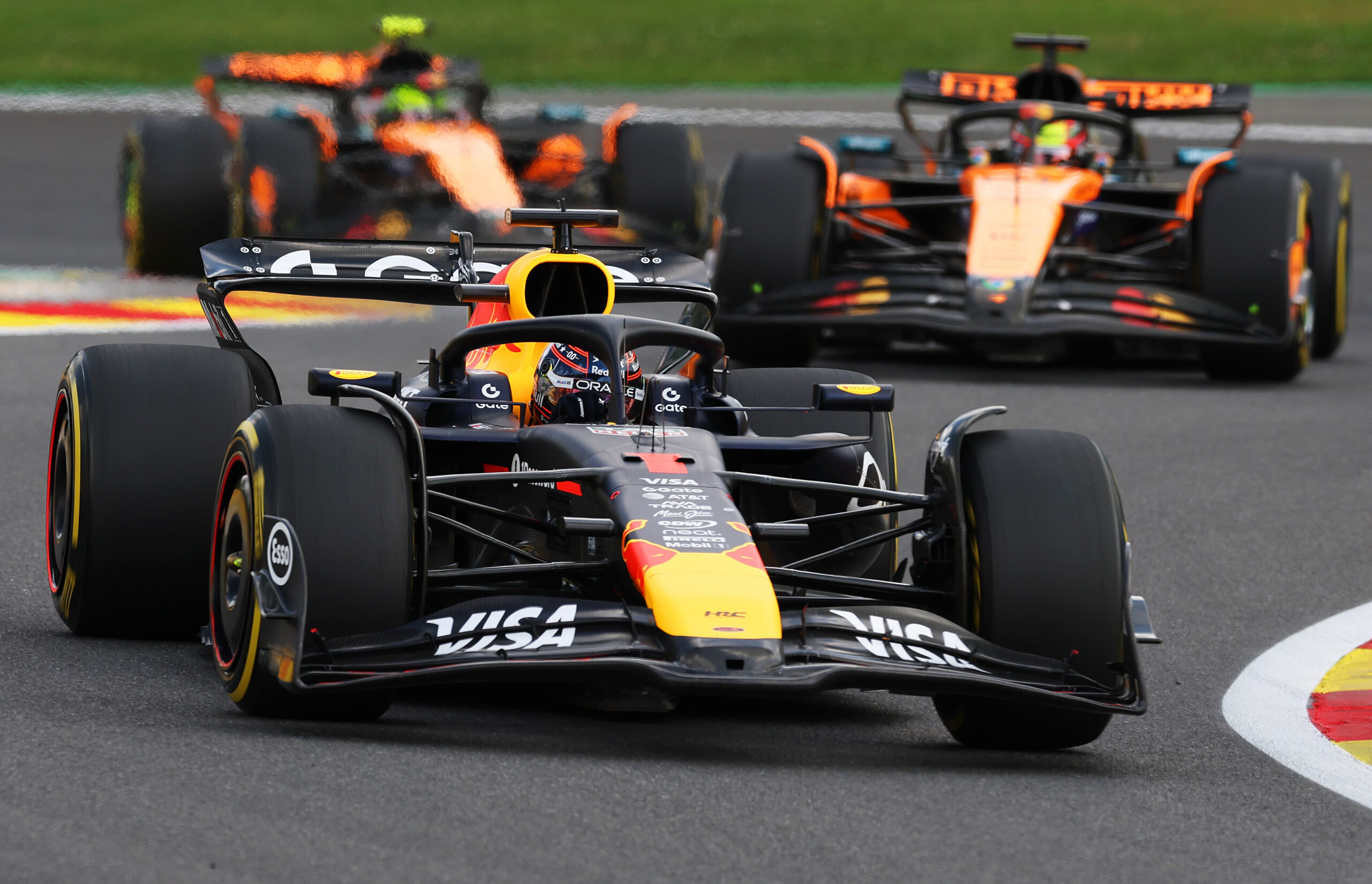
The FIA has announced stricter measurement methods for flexible aerodynamic components beginning at the next races. The focus is primarily on front wings and floor boards, areas where engineers have been pushing the boundaries of so-called aeroelasticity for years. At the heart of the scrutiny is whether certain designs are deliberately engineered to deform more at high speed than the regulations technically allow, granting a straightline advantage that teams don't have to pay for in corners.
Why Flexibility on the Straights Proves So Valuable
The technical regulations demand that aerodynamic components be rigidly mounted. Carbon fiber, however, is never truly rigid under load, and that's precisely where the art of aerodynamicists lies: they structure the carbon layup so that wing elements or floor sections deform deliberately at high speed and return to their original shape at low speed. On paper, the component remains rigid; on track, it behaves differently.
The effect cuts both ways. When a front wing flap bends backward and downward on the straight, the angle of attack flattens, drag decreases, and top speed rises without sacrificing downforce in corners. Simultaneously, it can stabilize the balance of a car that tends to oversteer in fast turns and understeer in slow ones, a compromise that modern ground-effect machines have wrestled with since the current regulations began. The same applies to the floor: if the plank deflects under load more than allowed, the car can run lower without excessive wear, maximizing the ground effect in corners.
How the FIA is Tightening Measurement Methods
Until now, the governing body checked stiffness primarily through static load tests in the garage: a punch applies a defined force to a fixed point, and as long as deflection stays within tolerance, the component is legal. The problem is obvious. A structure can easily pass this static test and deform far more under dynamic load on track, under real air pressure and real speed, than the test bench would ever reveal.
For the upcoming races, the FIA is therefore further reducing allowable deflection under test load and measuring at additional points and outer edges to catch asymmetrical deformations that a single central measurement point would miss. Added to this are high-resolution onboard cameras with optical reference markers that measure actual deformation in real time at speeds exceeding 300 km/h, plus stricter monitoring of floor-plate flexibility around measurement holes. What was once a spot check in the paddock becomes continuous track-side monitoring.
Impact on the Balance of Power at the Front
Such a tightening is rarely neutral. According to reports, teams like McLaren and Mercedes in phases of the 2024 and 2025 seasons sought part of their competitive balance through flexible front wings; they may now be forced to stiffen their designs. In practice, that means a trade-off: either losses in top speed on the long straights of overseas circuits or worse balance in slow corners, a deal no aerodynamicist welcomes. Conversely, teams whose concept relies more heavily on a rigid platform and less on controlled deformation could gain relatively, though that doesn't automatically translate to new wins.
It gets expensive for everyone. Mid-season, just before the logistically demanding overseas races, developing new wing or floor structures costs time and resources that come out of the budget cap elsewhere. At the same time, the current dispute is a preview of 2026, when active aerodynamics with mechanically adjustable wings become officially permitted and shallower floors are meant to limit the radical exploitation of flexi-floors. But passive elasticity in carbon fiber won't disappear either; it remains the domain where engineers will continue to hunt for every micrometer of play, and the FIA is laying the groundwork with these current tests to keep that in check.