
Klaus Weber · DTM-Korrespondent
A loophole in the tire regulations at Nürburgring led to a record number of retirements in Saturday's race and sparked a debate that extends far beyond the weekend.
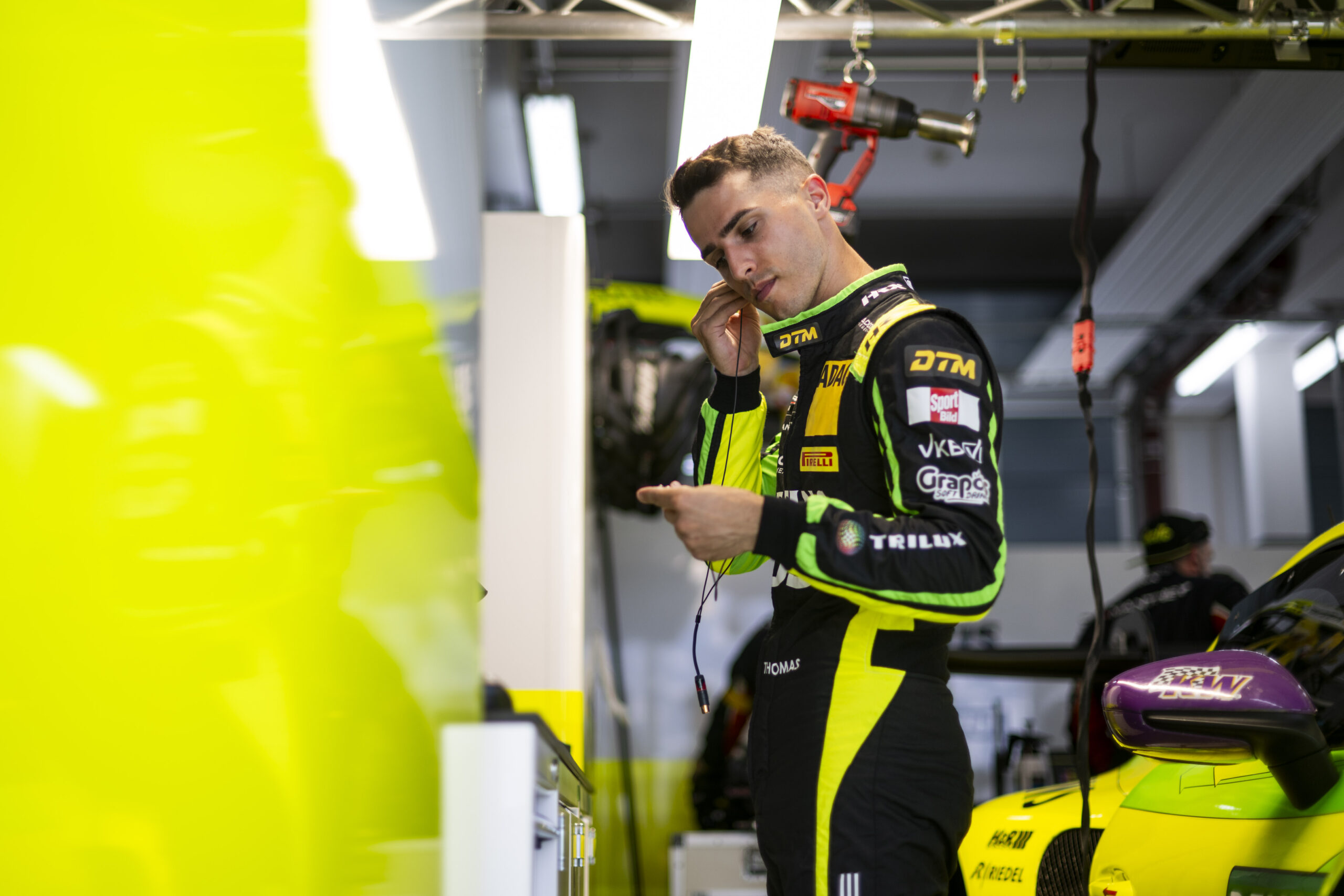
Thomas Preining has sharply criticized the behavior of several teams after the DTM weekend at Nürburgring, who parked their cars in the pits during Saturday's race despite no technical defect being present. Only 12 of 21 cars finished, a new low for the series. The controversy was triggered by a gap in the tire regulations that gives teams a tactical incentive to capitalize on a hopeless race.
The Tire Loophole in Nürburgring's Regulations
For the entire weekend, two qualifying sessions and two races, each driver at Nürburgring has only three sets of tires available. This limitation is intended to keep the cost level and grid strength tightly controlled. However, it creates an unintended side effect once a driver falls hopelessly to the back of the field in Saturday's race due to an accident or time penalty.
In such a situation, it becomes mathematically worthwhile to park the car early. An early Did Not Finish conserves a tire set that would otherwise be wasted in a hopeless race trim. Those who give up on Saturday enter Sunday's race with a fresh set and thus a real time advantage. That this calculation paid off multiple times at Nürburgring is evident from the attrition rate: only 12 of the 21 cars that started saw the checkered flag in Saturday's race.
Preining's Criticism: Fair Play Must Extend to the Fans Too
The Manthey Porsche driver had strong words after the races. "I didn't like that so many simply gave up because they had no chance or had to serve a penalty anyway," Preining said. "It's especially bad for the fans who pay to be here."
Preining called on DTM officials to take action against the practice. "You have to have more control over what the teams are doing, or penalize them when they park a car because it goes against the spirit of racing," he said. At the same time, the Austrian acknowledged that the teams' approach makes tactical sense as long as the regulations leave the corresponding loophole open. This assessment likely hits the core of the problem: the teams aren't acting irrationally, but rather the rulebook creates an incentive that works against the sporting value of the race.
Kalender Turns the Advantage Against Preining
Preining experienced firsthand how the tire loophole plays out on track. Tom Kalender from Team Landgraf had already retired in lap 7 on Saturday following a collision, leaving him with a complete tire set for Sunday. In Sunday's race, he deployed this advantage in the final sprint, overtaking Preining just before the checkered flag in the battle for second place and subsequently putting pressure on leader Marco Wittmann.
For Preining, this meant a direct sporting disadvantage that he didn't bring on himself through his own Saturday mistakes, but rather through a rule that rewards early retirement. That's precisely where his criticism hits home: the tire allocation should penalize a retirement, not reward it.
Wittmann Joins the Chorus, Regulations in Focus Before Winter Break
Preining wasn't alone in his position. BMW driver Marco Wittmann backed the criticism and called for a rule overhaul during the winter break. From his perspective, it's untenable when teams cite artificial reasons to park cars and thereby conserve tires.
Two approaches are currently being discussed as potential solutions: adjusting the tire allowance at weekends with particularly high wear, and stricter verification requirements for technical failures to distinguish genuine defects from tactical DNFs. Whether DTM officials will present a solution by the start of the next season likely depends on how broadly driver support for this position spreads in the coming weeks.