
Klaus Weber · DTM-Korrespondent
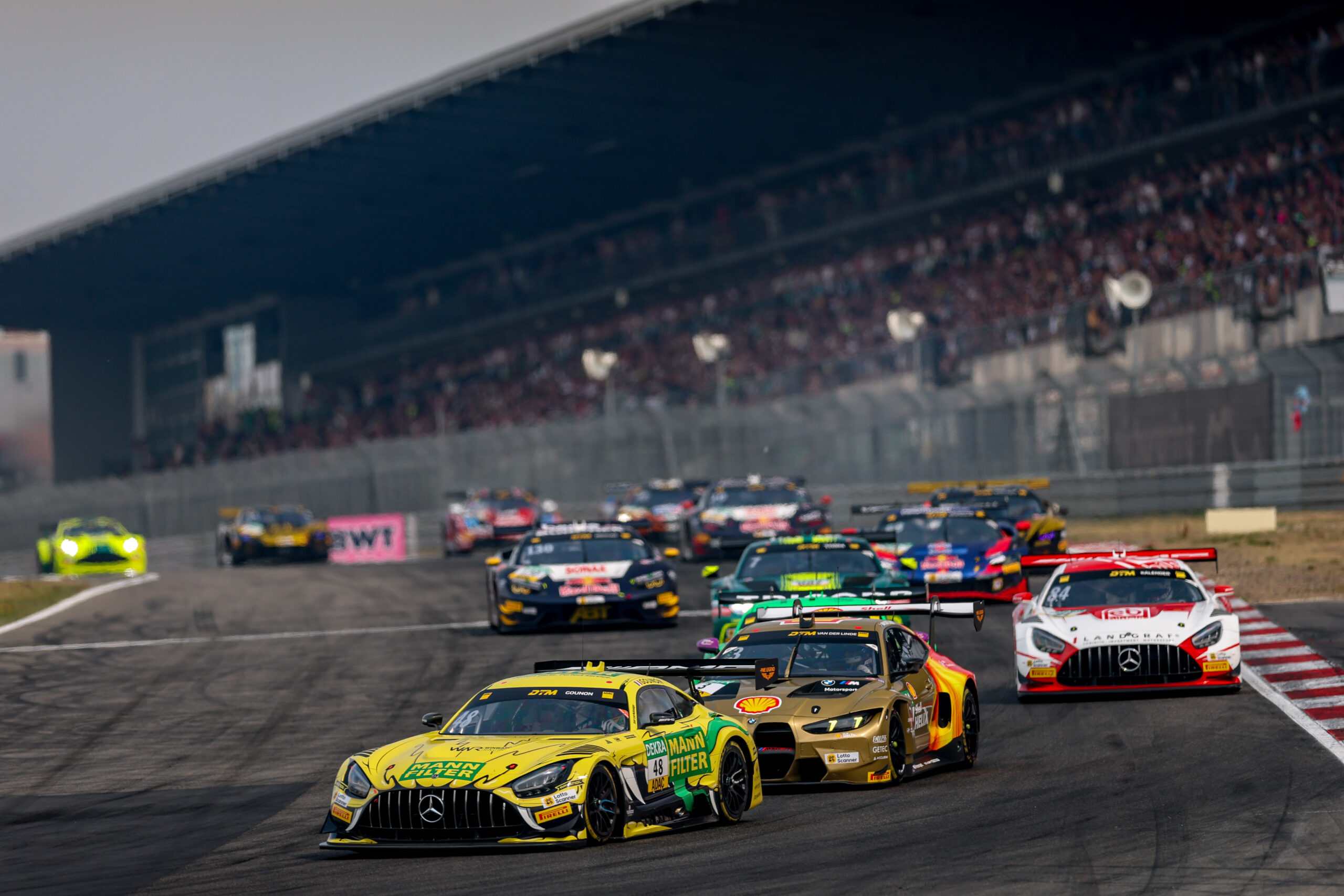
Jules Gounon secures pole for Race 2, but the real measure of field strength lies in the gap between first and ninth place.
Jules Gounon's 1:25.062 topped the timesheets, 0.113 seconds ahead of Ben Dörr and 0.140 clear of Matteo Cairoli. The order for Race 2 is set, yet the session's most revealing aspect is the compression of the field: the top nine drivers packed within just 0.24 seconds, a figure that underscores the razor-tight balance of performance across the current grid. Those who led Qualifying 1 the day before found themselves reshuffled in Session Two.
Front Row Completely Reshuffled from Q1
Matteo Cairoli had taken Qualifying 1 with 1:25.345 and entered the second session as the favorite. In Q2, he clocked 1:25.202, an improvement of 0.143 seconds, yet could only manage third place. The reason lies not in any faltering by Emil Frey Racing, but in the competition simply turning up the heat.
Jules Gounon had qualified seventh in Q1 with 1:25.561. In Q2, he posted 1:25.062 and improved by 0.499 seconds, nearly half a second. Ben Dörr jumped from 1:25.524 (Q1, fifth place) to 1:25.175 (Q2, second place), a gain of 0.349 seconds. Overall, the pole time dropped by 0.283 seconds compared to Q1, suggesting the track has continued to evolve throughout the weekend across the entire field, not just at the sharp end.
Repaired Cars Bounce Back
Kelvin van der Linde had retired from Race 1 with a technical failure. In Q2, his Schubert BMW nevertheless resurfaced in ninth place, posting 1:25.302, just 0.240 seconds behind pole. Tom Kalender, who had to end his race early after a collision with Nicki Thiim at the NGK chicane, also returned and set the eleventh-fastest time of the field in Q2 with 1:25.439 on eleventh. Both cases demonstrate that pit crews were able to repair damage from the first race day overnight without compromising the competitiveness of those cars.
Thiim himself posted the biggest jump in the lead pack: from eleventh in Q1 (1:25.663) to fourth in Q2 (1:25.220), an improvement of 0.443 seconds. Christian Engelhart, by contrast, was nowhere to be found on the timesheets. His Lamborghini had sustained such severe front-end damage in the collision with Thierry Vermeulen in Race 1 that repairs couldn't be completed in time for qualifying. Vermeulen himself was back in the field, his Ferrari fixed and ready, and lined up seventeenth with 1:25.641.
HRT Ford Performance Nearly Closes the Gap
The most striking deficit from Q1 involved HRT Ford Performance. Arjun Maini had ended up dead last there with 2:07.997, 42.652 seconds adrift of pole, while Finn Wiebelhaus was significantly better-placed at 1:37.465 but still massively off the pace with a 12.120-second shortfall. In Q2, both were back running normal race pace: Maini came home at 1:25.438 in tenth place, just 0.376 seconds behind Gounon. Wiebelhaus followed in fifteenth with 1:25.560, trailing by 0.498 seconds. For Maini, that meant his deficit shrank from over 40 seconds to under half a second, a swing that is unusually large in the GT3 world and indicates that whatever issue held both drivers back in Q1 was sorted between sessions.
The result is a Race 2 grid that offers no guarantees based on the current championship standings. Cairoli, leading the points after his Race 1 victory, starts from third, while Gounon and Dörr line up on the front row. In a field where nine cars fit within 0.24 seconds, the pit stop window will likely prove as decisive as the grid position itself.