
Bobby Travis · NASCAR/IndyCar Correspondent
One of the most successful partnerships in the IndyCar Series is getting an extension, right ahead of the biggest technical overhaul in years.
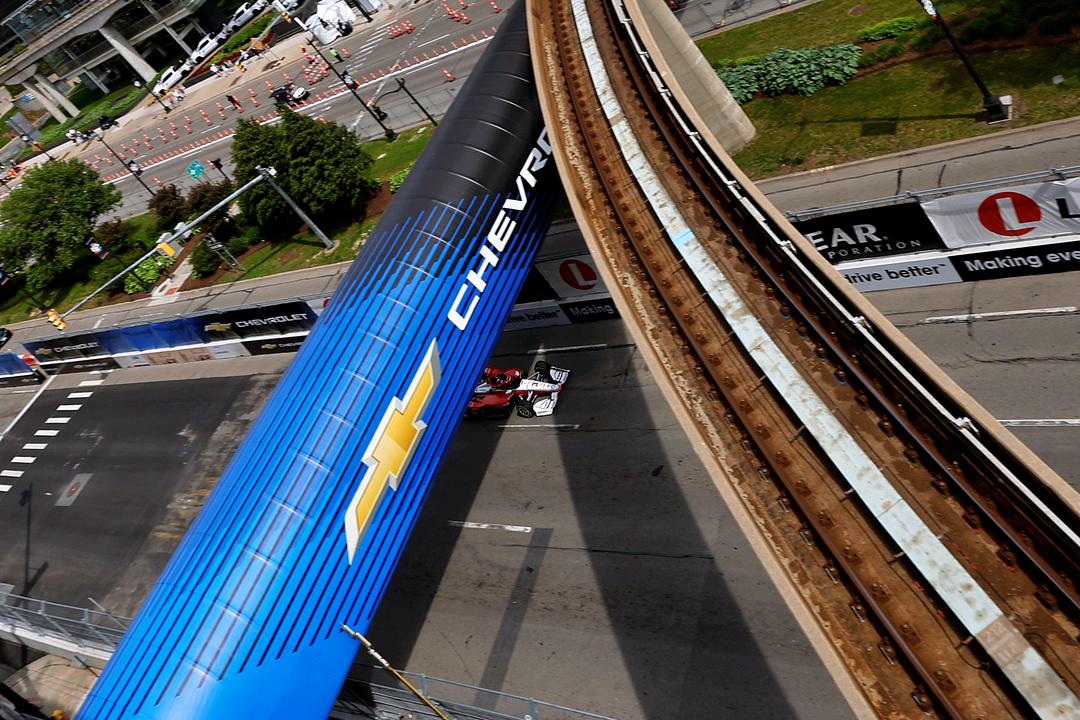
Team Penske and Chevrolet have extended their multiyear partnership in the IndyCar Series, both sides announced on October 8. The new deal secures the relationship beyond the start of IndyCar’s new era in 2028, when an all-new chassis and a new engine formula with an evolved hybrid system will reshape the series. For a team that ran up front several times in 2026 with Chevrolet power, the decision sends a clear message: stick with the proven package rather than risk a manufacturer switch during a technology leap of this size.
Why the extension is coming now
The timing is no coincidence. With the new chassis and the new 2.4-liter twin-turbo V6 hybrid formula arriving in 2028, the entire IndyCar Series faces an upheaval of a kind the cars have not seen in a long time. In a transition phase like this, one thing matters most to a top team: a partner with short lines of communication and a technical understanding that has grown over years.
For decades, Team Penske has stood for exactly this kind of long-term collaboration between team and manufacturer in American motorsport. Founded by Roger Penske in 1966, the organization has built a reputation across several series for professional, consistent partnerships. Since Chevrolet came on board as a factory partner in 1986, the combination has collected 125 wins and 157 pole positions, including nine Indianapolis 500 victories. Chevrolet staying on board beyond the big technology change in 2028 fits that pattern. “Chevrolet has been a terrific partner for our NTT INDYCAR SERIES team, both on and off the track,” Roger Penske said, according to IndyCar. Penske was also the third Chevrolet extension in three days: Arrow McLaren had extended on October 6, Ed Carpenter Racing on October 7. With that, Chevrolet is locking in several teams for the long term ahead of the new era.
2026 as proof: the combination works
Anyone wondering why both sides are carrying on only has to look at the past season. With Chevrolet power, Team Penske took pole position at the season opener in St. Petersburg and won at Phoenix Raceway, World Wide Technology Raceway and the season finale at WeatherTech Raceway Laguna Seca, where Scott McLaughlin won from pole.
Three wins spread across the season, plus the fastest time at the opener in St. Petersburg: that is exactly the versatility IndyCar demands from a top team. Oval pace at Phoenix and World Wide Technology Raceway, plus road course strength at Laguna Seca at the end of the season: anyone who runs up front across such different disciplines has an overall package of chassis setup and engine that apparently shows few weaknesses.
What 2028 means for the team
With the new chassis, the new 2.4-liter V6 and an evolved hybrid system that gets a battery for the first time in 2028, every manufacturer and team faces a learning curve that cannot simply be extrapolated from existing data. New powertrains bring new questions about weight distribution, cooling and energy management, areas where the coordination between factory engineers and team technicians is likely to be decisive for months.
That Team Penske and Chevrolet have already agreed to continue, around a year and a half before the introduction, should benefit the development work above all. When the new era starts in 2028, it will show whether a partnership built over many years really delivers the edge both sides are clearly counting on with this extension.