Marco Rossi · F1 Correspondent
A qualifying session full of yellow-flag drama and a race pace that carried Mercedes through the entire distance produced a Mercedes one-two in Spielberg with Verstappen sandwiched between them – and raises questions about tyre consistency at Red Bull and McLaren.
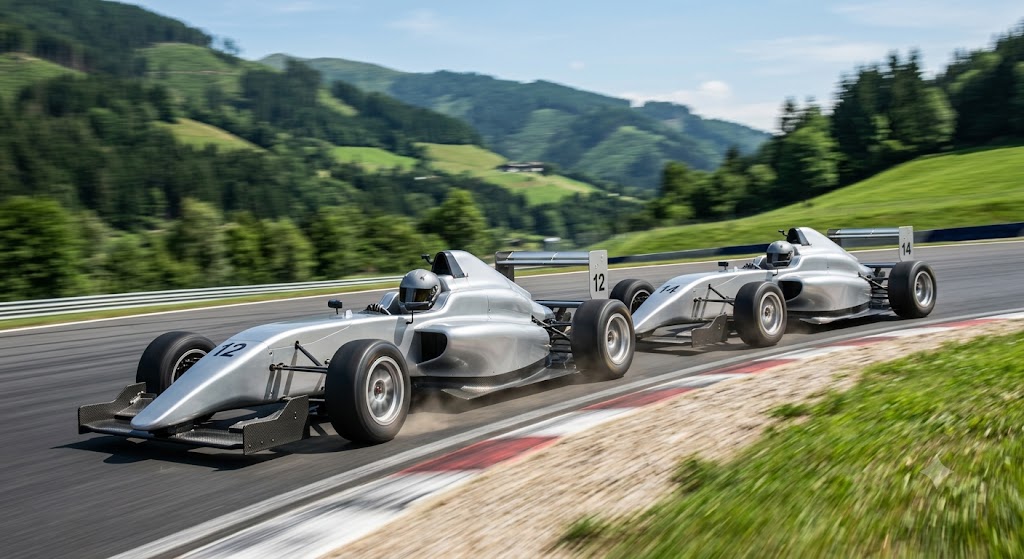
The Red Bull Ring has shown several times already this season that short laps and minimal run-off areas punish the smallest mistake immediately. That was exactly the defining theme of the weekend: George Russell secured pole in a session overshadowed by a Verstappen crash, then went on to win comfortably ahead of Max Verstappen and Andrea Kimi Antonelli, providing proof that Mercedes is currently the more consistent quantity over a full race distance than the competition from Milton Keynes and Woking.
Qualifying: Chaos Creates Russell’s Window
The situation ahead of the decisive qualifying lap could hardly have been more chaotic: a crash by Max Verstappen brought out yellow flags and forced several drivers to abandon their flying laps or complete them under compromised conditions. Russell used the resulting time window and the clear track to set the fastest lap of the session with a 1:06.113 – an advantage that is largely explained by timing rather than a pure speed difference.
The gap of the chasers is telling: Charles Leclerc came within 0.236 seconds of Russell, Lewis Hamilton within 0.295 – meaning both Ferraris were closer than the second Mercedes of Antonelli (+0.301), and certainly closer than Verstappen himself, who still finished fifth despite his off-track excursion, +0.362 seconds back. That suggests Red Bull’s lap time was fundamentally competitive this weekend, but the crash cost the crucial final improvement.
Long-run Pace: Why Mercedes Pulled Away in the Race
While the qualifying result was partly down to chance, the race distance tells a different story. Russell controlled the race from pole and crossed the line with a 1.611-second lead over Verstappen – a gap that is relatively moderate over a full race distance at the Red Bull Ring and suggests Verstappen was able to keep pace until the end without ever genuinely attacking.
More striking is Antonelli’s gap in third on the podium: just 1.986 seconds behind Russell (and therefore barely 0.4 seconds behind Verstappen) means all three podium finishers ran almost in lockstep over the full distance – a sign that tyre degradation noticeably favoured Mercedes in Spielberg. The gap to Oscar Piastri in P4, by contrast, is brutal: +21.809 seconds. McLaren had been consistently near the front with Piastri and Norris throughout free practice, but had no answer to Mercedes’ consistency in the race – a slump that can’t be explained by the qualifying result alone, and instead points to problems with tyre management over the distance.
The Rest of the Field: Red Bull’s Second Car and the Retirement Chain
Isack Hadjar again confirmed his growing consistency in the second Red Bull seat with sixth place (+29.399s), while Lando Norris fell behind his teammate in P7 – a setback that, together with Piastri’s deficit, supports the theory that McLaren’s qualifying speed advantage currently can’t be reproduced in race trim. The Racing Bulls of Liam Lawson and Arvid Lindblad rounded out a solid points haul for the team with ninth and tenth.
At the back of the field, an unusually long list of retirements piled up: Lance Stroll, Carlos Sainz, Sergio Pérez and Valtteri Bottas failed to finish – a result that hits Cadillac hardest, as both of the team’s drivers retired, while Williams at least got one car home with Alexander Albon’s P17. For the championship, the Spielberg Sunday means one thing above all: Mercedes has closed the gap to the top with its double podium, while McLaren urgently needs to work out why its long-run pace doesn’t match its qualifying speed – a question that’s likely to be asked again at the next race with a similar track character.