
Bobby Travis · NASCAR/IndyCar-Korrespondent
Starting in 2027, having deep sponsorship pockets won't automatically guarantee a seat in the NTT IndyCar Series. Performance in the feeder series Indy NXT is now the measuring stick.
The NTT IndyCar Series is tightening its driver licensing rules beginning in the 2027 season. In early September, the series presented teams with a revised qualification and licensing procedure that establishes clear, objective criteria for advancement. The message is unmistakable: drivers who previously secured rides primarily through massive annual sponsorship budgets will no longer find entry to the cockpit quite so easy.
Indy NXT Becomes the Benchmark, Not the Budget
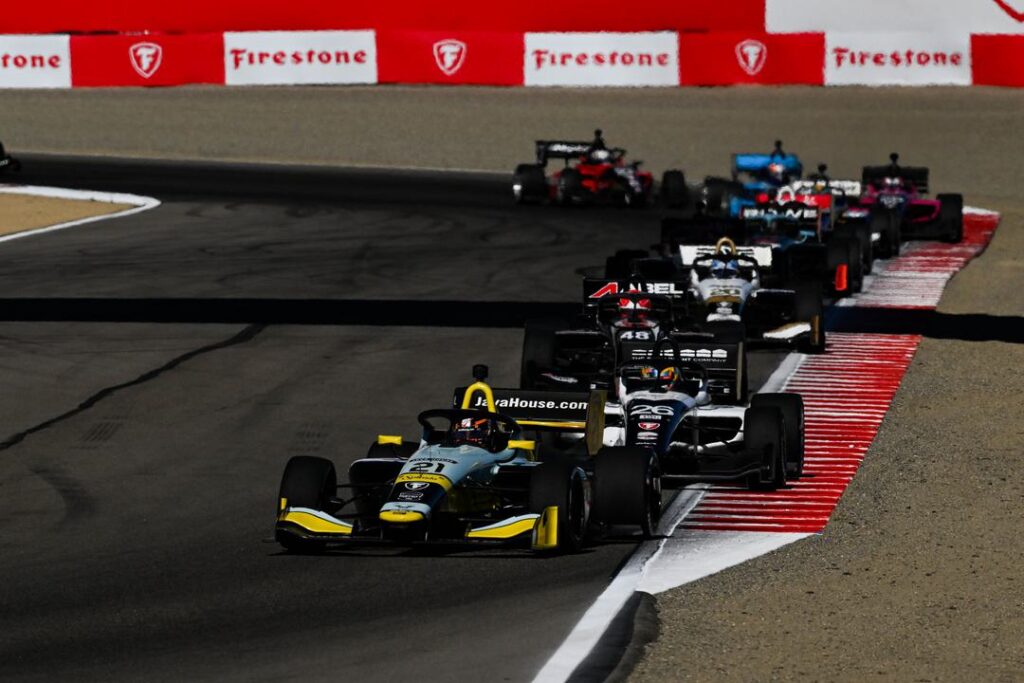
The new system has three tiers. Drivers automatically qualify as "Competitively Qualified" if they win the Indy NXT championship, finish in the top three, or rack up at least two race wins within 24 months. A single victory makes a driver "Evaluation Eligible," granting access to official IndyCar test sessions where pace, consistency, vehicle control, racecraft, traffic management, procedures, and engineer communication are assessed. All other drivers enter a comprehensive review of their racing résumé. Both statuses remain valid for 24 months each.
A minimum of twelve Indy NXT starts is required to qualify under the points-based system. Drivers falling short must also undergo the résumé review. Even "Competitively Qualified" drivers aren't home free, though. The classification fulfills only the sporting requirements for road course and street course licenses; safety, medical, and administrative requirements remain mandatory. Oval track rules stay unchanged, with required tests before racing and the Rookie Orientation Program for the Indianapolis 500.
Drivers from established international series such as Formula 1, Formula 2, Formula E, Super Formula, IMSA GTP, NASCAR Cup, or the WEC Hypercar class fall outside the new framework. They receive direct approval based on their résumé or an evaluation invitation, as before.
The Charter Stays, But It Won't Solve the Driver Problem
The licensing reform is separate from the charter system, which has been in place since 2025. Back then, 25 charters were awarded to teams that ran full-time schedules in 2024, with a maximum of three per team and terms running through 2031. Outside Indianapolis, the field is capped at 27 cars; chartered entries receive a guaranteed starting spot and are the only cars eligible for Leader's Circle program premiums. Indianapolis operates differently, however, with the 33-car field open to all.
That's where the squeeze hits smaller teams hardest. The charter guarantees them a starting slot but not the funding to fill it. And the driver who brings that funding will now face far stricter scrutiny from the series.
Small Teams Under Pressure, With a Chassis Change Looming in 2028
The paddock largely welcomes the competitive logic, but smaller race teams face a tighter squeeze. AJ Foyt Racing, Dale Coyne Racing, and Juncos Hollinger Racing each hold two charters and operate on annual budgets of nine to twelve million dollars per car. In recent years, they've plugged significant portions of those shortfalls with exactly the sort of well-funded drivers the new licensing system now restricts. Only a few months remain before the 2027 season starts to close that gap through traditional sponsorships.
The Foyt situation illustrates just how concrete this becomes. The team was considered a landing spot for Josh Pierson, who comes with a funding package reportedly in the high eight figures. Though Pierson won the Indy NXT season finale at Laguna Seca in 2026, a single victory only earns him "Evaluation Eligible" status and requires series sign-off. For 2027, Foyt has since signed Dennis Hauger, the 2025 Indy NXT champion, to replace Santino Ferrucci.
The challenge intensifies with 2028, when the completely new IR-28 chassis arrives. Teams alone estimate over a million dollars per vehicle just for the new car, rendering the current DW12 inventory nearly worthless overnight. Losing this revenue stream now, when smaller teams have become especially dependent on it, only compounds their difficulties. How IndyCar navigates the tension between sporting ambition and economic reality will likely become one of the series' most compelling questions in the months ahead.