Henri Dubois · Endurance Correspondent
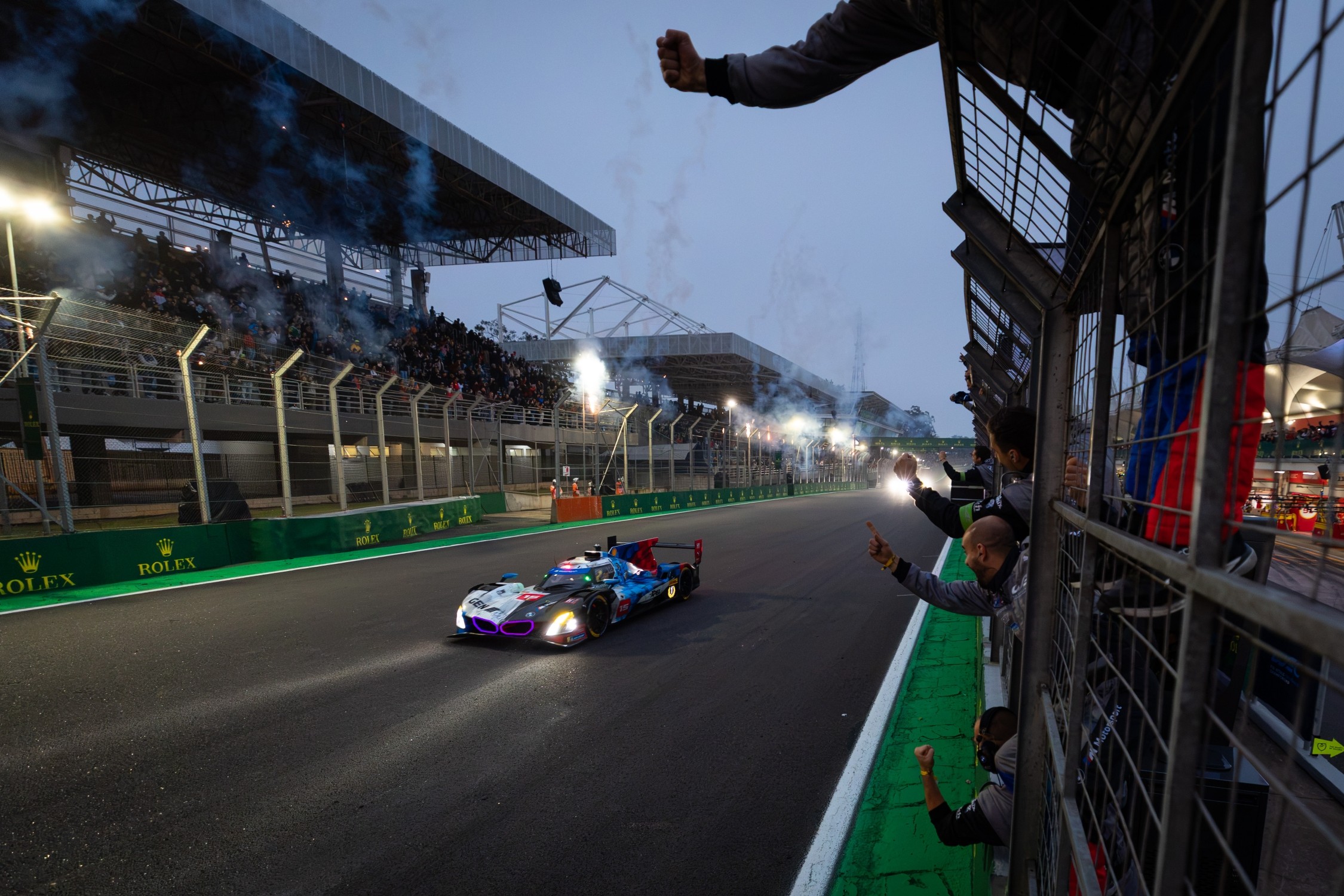
After six hours between the sun and shade of Interlagos, BMW M Team WRT stood at the front, just over two seconds ahead of Ferrari, while in the LMGT3 class an outsider trio from the Turkey-by-TF team left an entire category behind.
Six hours at Autódromo José Carlos Pace are rarely a straightforward race, and this weekend confirmed once again why Interlagos ranks among the circuits in the Hypercar class where tenths of seconds spread across hours determine the outcome, while in the LMGT3 class one vehicle category literally lapped the field. In the end, the first four Hypercar positions lay within just over twelve seconds, a result that speaks less of a single dramatic moment than of the cumulative effect of countless small decisions over six hours of racing. In the LMGT3 class, by contrast, a different picture emerged: Racing Team Turkey by TF claimed victory with a massive advantage of 23 laps over the next-best class position in the standings, a success that lays bare the sheer attrition that this race inflicted on large portions of the field.
A War of Attrition with a Tight Finish Up Front
Kevin Magnussen, Raffaele Marciello, and Dries Vanthoor brought the BMW M Team WRT car across the finish line first after six hours and roughly 26 seconds over the clean race distance, with a margin of 2.254 seconds over the Ferrari AF Corse of Alessandro Pier Guidi, James Calado, and Antonio Giovinazzi. Such a gap after six hours of racing tells much about the nature of this weekend: it is no product of chance on the final lap, but rather the result of a race in which positions barely changed across many stints because both driver trios were able to maintain comparable pace over the entire distance.
Cadillac Hertz Team Jota completed the podium with Norman Nato and Will Stevens, just 6.687 seconds behind the leader, with the additional recognition for clean driving by the pair (clean race bonus). Notably, the second Cadillac car with Earl Bamber, Sébastien Bourdais, and Jack Aitken finished in fourth position just over six seconds further back, demonstrating how tightly the top group remained bunched throughout the entire race duration. A race that allows only twelve seconds between the first four positions across six hours is one in which every pit stop decision, every driver change, and every response to changing track conditions carries weight.
The Training Favorites Find Themselves Further Back
Anyone who had followed the free practice sessions would have been initially surprised by the race results. Genesis Magma Racing, with Mathieu Jaminet, Paul-Loup Chatin, and Daniel Juncadella, had set the quickest time in the second free practice session and was also right up front in the Hyperpole session with multiple cars, yet in the race this trio ultimately found itself down on position 13, one lap down. Alpine Endurance Team experienced a similar fate, which had set the best time in the third free practice with Frédéric Makowiecki, Jules Gounon, and Victor Martins, but landed among the lapped cars in the race, with Ferdinand Habsburg, Charles Milesi, and António Félix da Costa as the best-placed Alpine trio on tenth.
This discrepancy between practice pace and race pace is no rarity in endurance racing. It serves as a reminder that a single quick lap over a distance of just a few kilometers reveals little about how a car will perform across double stints, changing tire temperatures, and the cumulative fatigue of a driver trio. Toyota Racing with Mike Conway, Kamui Kobayashi, and Nyck de Vries lined up in twelfth position, one lap down, while the second Toyota car with Ryō Hirakawa, Brendon Hartley, and Sébastien Buemi finished at the back of the classified Hypercar field with twelve laps down, a result suggesting a longer strategic window or technical issue during the race, though the available data does not point to a single trigger.
LMGT3: Racing Team Turkey by TF Dominates a Worn-Out Class
While the Hypercar leaders fought over seconds, the LMGT3 class told a completely different story. Peter Dempsey, Salih Yoluç, and Charlie Eastwood brought the Racing Team Turkey by TF car to the finish with a margin of 23 laps over the next-placed class competitors from Team WRT (Daniel Harper, Parker Thompson, Anthony McIntosh), a gap that can only be explained by a combination of consistent pace across the entire race distance and failures or delays for other LMGT3 cars. The Bend Manthey with Yasser Shahin, Riccardo Pera, and Richard Lietz completed the podium with a further lap down from Team WRT.
For Racing Team Turkey by TF, which had been running mid-field in LMGT3 times in the free practice sessions and qualifying, this was by far the most dominant success of the season. It exemplifies how little pure practice time tells us about a car’s actual race pace once pit stop strategy, tire management, and the interplay of three drivers over six hours come into play. For the championship, this São Paulo weekend means above all one thing: in the Hypercar class, the field remains as tightly bunched as before following this tight result, with BMW as the next points scorer in the title fight, while in the LMGT3 class Racing Team Turkey by TF suddenly announces itself as a new name in the championship conversation. How both classes prepare for the next race weekend will likely depend heavily on how thoroughly the teams translate the lessons from this grind test at Interlagos into their next race strategy.