Marco Rossi · F1 Correspondent
Max Verstappen claimed his first win on the Marina Bay street circuit at the 2026 Singapore Grand Prix, but behind the flawless drive lay a weekend full of technical challenges.
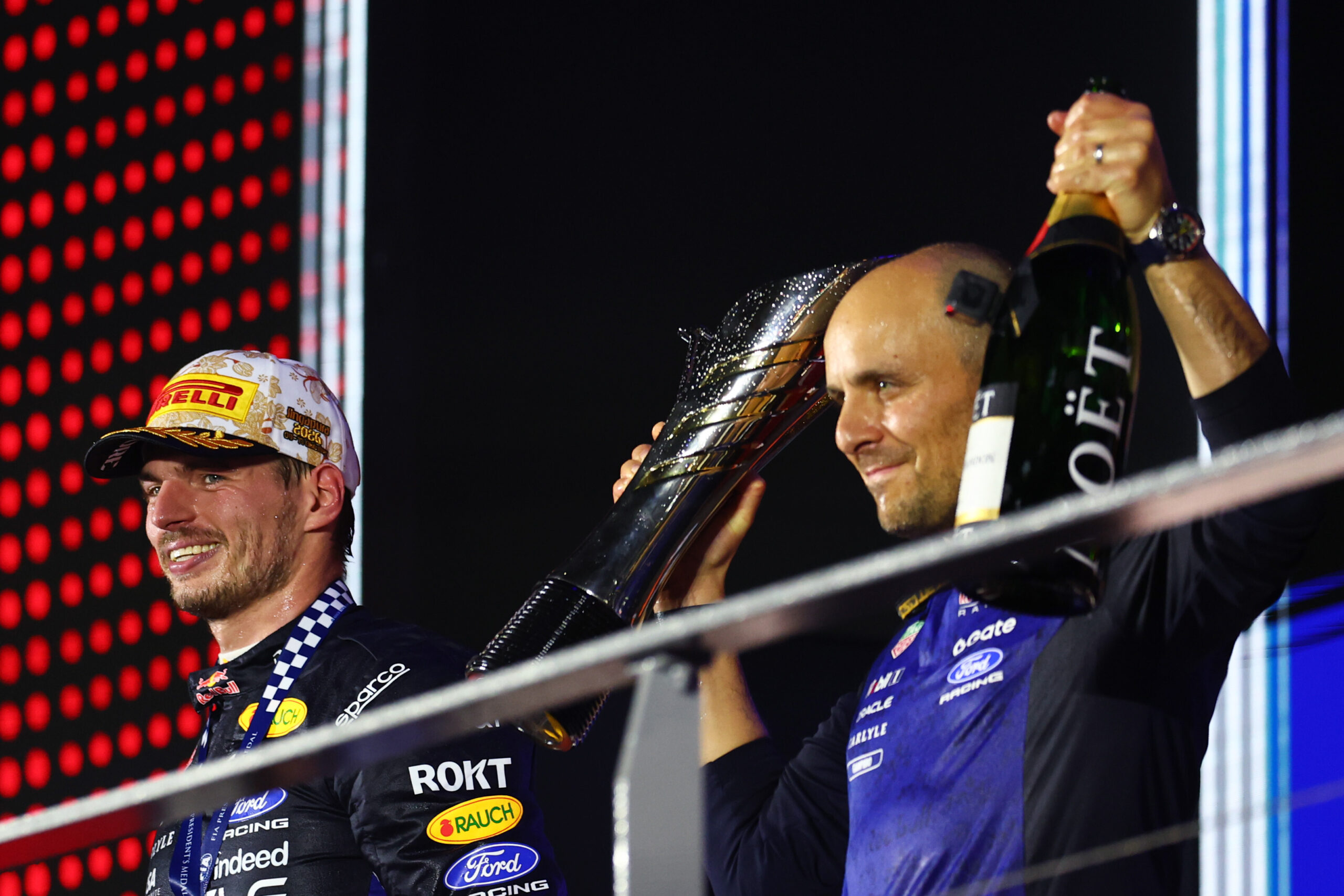
Max Verstappen won the Singapore Grand Prix from pole position last weekend in his 250th Grand Prix, after also taking the sprint victory. It was his first win ever on the Marina Bay Street Circuit in his tenth attempt at the track. That the Dutchman crossed the finish line in commanding fashion belies how much went wrong behind the scenes during the race: a radio failure forced him and his race engineer to improvise their communication, and energy deployment issues with the power unit cost him crucial tenths in the opening laps.
Binary code as an emergency solution
During the main race, Verstappen's radio connection worked in only one direction. He could hear his race engineer Gianpiero Lambiase's instructions clearly, but his own responses came through the Red Bull pit wall only as garbled static. For a team that must react in real time to tire wear, safety car phases, and undercut windows, functioning two-way communication is normally indispensable.
Lambiase solved the problem with an improvised method that seemed more like a signaling system from the early days of motorsport than the data deluge of current Formula 1. Late in the race, he established a contingency for a potential safety car: if Verstappen wanted to pit under safety car conditions, he should simply stay silent; if he wanted to hold his position on track, he should press the radio button. A simple yes-or-no system born out of necessity. Verstappen said afterward he believed his engineer had understood what he wanted and what he didn't.
After the race, Verstappen took the situation with his typical dry wit: perhaps GP was just glad not to hear him for once, he joked. But behind the humor lies a more serious point: a radio failure in a race that lives and dies by pit stop windows and tire strategy could have proven costly under different circumstances.
Sputtering power delivery in the opening laps
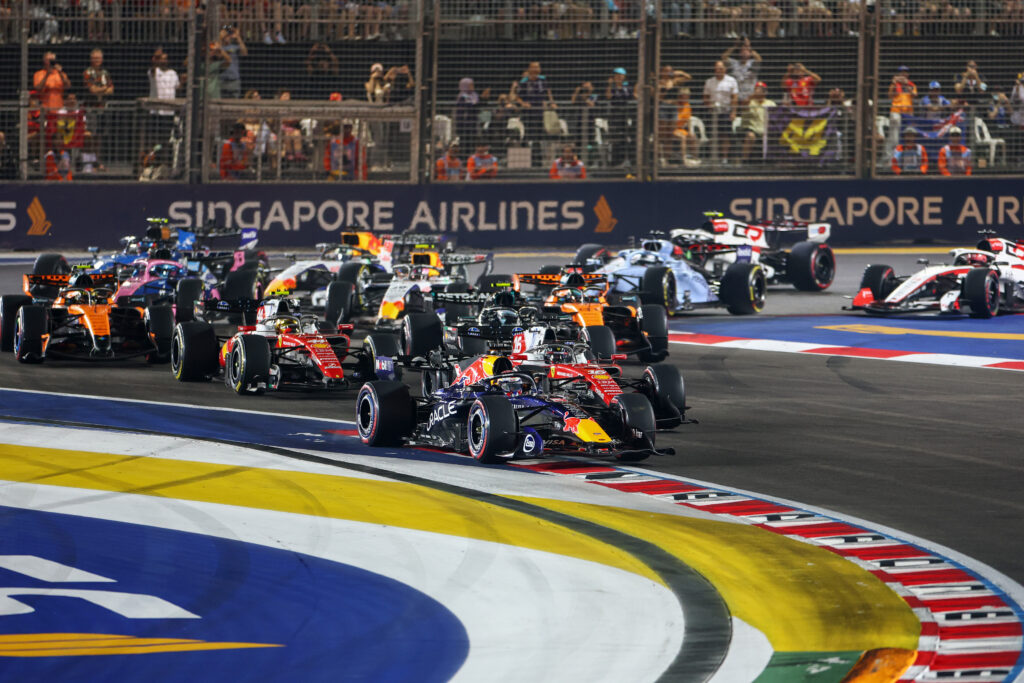
The car didn't run smoothly from the start either. Verstappen noticed irregular engine power right at the start, even before he'd fully released the clutch, a detail easily overlooked in a start-to-finish victory but one that shows how razor-thin the margin between perfect execution and a lost start can be, even for the favorite.
Things became more critical in the opening laps after the start when issues with the hybrid unit's energy deployment arose. Verstappen lost noticeable straightline pace as a result, giving Charles Leclerc in the Ferrari a chance to attempt an overtake at Turn 7. Once the deployment problem was resolved, the car ran flawlessly according to Verstappen. Reading about it afterward in a winner's report makes it sound like a footnote, but in the moment it presumably caused some tense faces at the Red Bull pit wall.
A weekend as a symptom of a complex season
Singapore's problems didn't stand in isolation. On Friday, a human error by race control had temporarily blocked the so-called overtake mode for parts of the field during sprint qualifying. Just a week earlier, at the Bahrain Grand Prix relocated to Sepang, software glitches in wet conditions on the formation lap had led to system lockups on several cars. Two races, two different incidents, but a common thread: the technical complexity of the current generation of cars that has been in force this season with its 50/50 split between electric and combustion motors.
Verstappen himself had already called for the sport to learn a lesson from the Sepang chaos. If pace drops too low for any reason, the car simply bogs down, he had described the software behavior at the time. In Singapore he also acknowledged that radio problems had plagued him all season, but were particularly bad this weekend.
For Red Bull, there remains a crucial breakthrough regardless: Verstappen's first win on a track where he had come away empty nine times before, achieved in his 250th Grand Prix and under anything but ideal conditions. Whether the software problems of the new generation persist in the coming races or whether Singapore and Sepang prove to be outliers could prove at least as decisive for the title fight ahead as raw pace on track.